‘Roy Lichtenstein: Like New’ at the Whitney Museum
New York
11 October 2026 - 10
May 2027
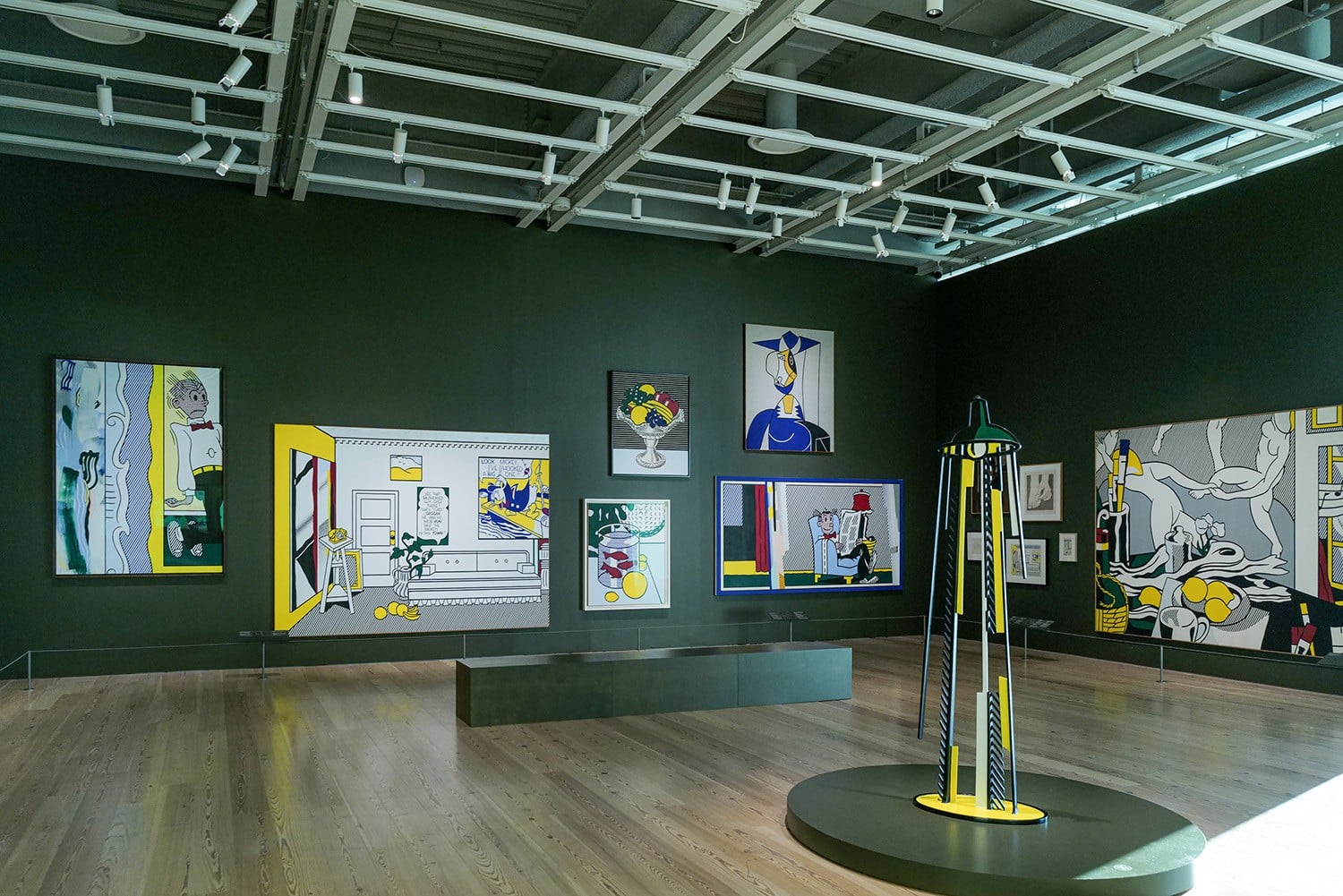
The Whitney Museum of American Art in New York presents ‘Roy Lichtenstein: Like New’, a major retrospective bringing together approximately 130 works spanning the 1940s to the 1990s. The artist’s first New York retrospective since 1993, the exhibition includes painting, drawing, collage, prints, sculpture, and film, considering not only the images for which he became famous but also the transformative processes that shaped his practice.
Co-curated by Whitney curator Meg Onli and artist Alex Da Corte, the exhibition examines recurring themes and techniques across different periods of Lichtenstein’s career. Paintings such as Look Mickey (1961), Masterpiece (1962) and Drowning Girl (1963) appear alongside lesser-known works, illuminating Lichtenstein’s sustained interest in how images are reproduced, enlarged and reinterpreted. The exhibition also reunites the works presented in his landmark 1962 exhibition at Leo Castelli Gallery, which helped establish his distinctive approach to the visual language of American mass culture.
With their bold contours, flat colours, and Ben-Day dots, Lichtenstein’s paintings resemble mechanical reproductions, although their seemingly impersonal surfaces were meticulously constructed by hand. The exhibition also recreates murals, including the monumental Greene Street Mural (1983), allowing his graphic vocabulary to be experienced on an architectural scale. Works by Louise Lawler, Richard Pettibone, and Sturtevant extend the discussion to the influence and reinterpretation of his imagery by subsequent generations.
Across ‘Line New’, Lichtenstein’s appropriation of existing imagery emerges as a consistent aspect of his practice, extending well beyond the comic-book paintings of the early 1960s. His experiments with scale, composition, and reproduction reveal a sustained interest in the relationship between the original image and its reinterpretation, while highlighting the continued relevance of these questions for subsequent generations of artists.